






×
Fill Form & Download Our Catalogue
How To Choose Right Gantry Structure for Warehouse Operations
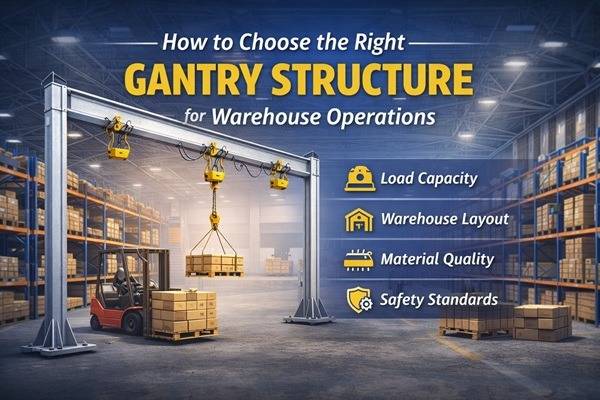
How to Choose the Right Gantry Structure for Warehouse Operations
Warehouses often face a common challenge — heavy materials must be moved, supported, or stored safely, but the existing infrastructure does not always support efficient operations. Choosing the wrong overhead framework can create safety risks, workflow delays, and higher maintenance costs. Understanding how to choose the right gantry structure for warehouse operations helps warehouse owners, contractors, and facility managers create safer and more efficient work environments.
Why Gantry Structures Are Important in Warehouse Operations
Modern warehouses handle large volumes of goods and heavy equipment every day. A strong gantry structure provides reliable overhead support for lifting systems, signage, or industrial setups that require stability and durability.
A properly designed gantry structure helps:
- Improve material handling efficiency
- Reduce workspace congestion
- Increase safety for workers and equipment
- Support heavy loads with structural stability
- Optimize vertical warehouse space
For growing warehouses, investing in the right structure is not just a technical decision — it is a long-term operational advantage.
Key Factors to Consider Before Choosing a Gantry Structure
Selecting the right structure requires careful evaluation. Here are the most important factors to consider.
1. Load Capacity Requirements
The first step is understanding how much weight the structure needs to support. Underestimating load capacity can cause serious safety issues.
Consider:
- Maximum load weight
- Frequency of use
- Future expansion needs
- Dynamic vs static load requirements
It is also important to consider load distribution across beams and columns, as uneven load distribution can create structural stress and reduce the lifespan of the gantry system.
Always plan for slightly higher capacity than your current requirement to avoid future redesign.
2. Warehouse Layout and Space Availability
Every warehouse has a unique layout. The size and span of the gantry structure must match available space.
Check:
- Ceiling height
- Floor space
- Movement area for equipment
- Entry and exit pathways
A well-planned structure should improve movement, not block it.
3. Material Quality and Durability
Material choice directly affects lifespan and maintenance. For industrial use, galvanized steel is widely preferred because it offers:
- High strength
- Corrosion resistance
- Long-term durability
- Better performance in demanding environments
Choosing quality materials reduces repair costs over time.
4. Safety Standards and Structural Stability
Warehouse environments require strict safety compliance. A strong gantry structure should be designed to handle:
- Load stress
- Vibration
- Environmental impact
- Long-term wear
Engineering accuracy and proper fabrication play a major role in preventing structural failures.
5. Customization Based on Warehouse Operations
Not all warehouses operate the same way. Some need wider spans, while others require specific heights or load distribution.
Custom-designed gantry structures help:
- Match operational workflow
- Improve space utilization
- Support future upgrades
- Increase overall efficiency
Types of Gantry Structures Suitable for Warehouses
Understanding available options helps you make a better decision.
Fixed Gantry Structures
Ideal for permanent warehouse setups where stability and long-term use are priorities.
Heavy-Duty Industrial Gantries
Designed for warehouses handling large equipment or high-load operations.
Overhead Support Gantries
Used for mounting systems, signage, or operational support frameworks.
Portable Gantry Structures
Used in warehouses where equipment needs to be moved between different work zones.
Adjustable Height Gantries
Suitable for facilities where equipment height requirements change depending on the operation.
Selecting the right type depends on workflow, load needs, and available space.
Common Mistakes to Avoid When Selecting a Gantry Structure
Many businesses focus only on price and ignore critical factors. Avoid these common mistakes:
- Choosing based only on cost
- Ignoring load calculations
- Using low-grade materials
- Not planning for future expansion
- Skipping expert consultation
- Ignoring structural design calculations
A small mistake during the selection process can lead to significant costs later.
Choosing a Reliable Gantry Structure Supplier for Warehouse Operations

Selecting an experienced gantry structure supplier ensures proper engineering design, material quality, and safe installation. A reliable supplier should offer structural expertise, high-quality galvanized steel, customization options, and compliance with industry safety standards.
Companies like Vedant Sales Corporations, known as a trusted Gantry Structure Supplier in India, provide precision-engineered solutions designed for long-term durability in industrial and warehouse environments.
Installation and Maintenance Considerations
Proper installation ensures maximum safety and performance. Even the best-designed structure can fail if installation is not done correctly.
Key practices include:
- Professional installation by experienced teams
- Regular structural inspections
- Preventive maintenance schedules
- Early identification of wear or corrosion
Routine maintenance helps extend lifespan and maintain safety standards.
Key Selection Factors for Gantry Structures
| Factor | Importance |
|---|---|
| Load capacity | Prevents structural failure |
| Material quality | Improves lifespan |
| Warehouse layout | Ensures smooth movement |
| Safety standards | Protects workers |
| Customization | Matches operational needs |
Quick Checklist Before Finalizing Your Gantry Structure
Before making a final decision, confirm:
- Load capacity is accurately calculated
- Warehouse dimensions are verified
- Material quality is checked
- Safety standards are followed
- Supplier experience is proven
- Future expansion is considered
This checklist helps avoid costly mistakes.
Conclusion
Choosing the right gantry structure for warehouse operations is not just about selecting steel frameworks — it is about improving safety, efficiency, and long-term reliability. By focusing on load capacity, material quality, warehouse layout, and trusted engineering support, businesses can create safer and more productive warehouse environments.
A well-designed gantry structure supports smooth operations today while preparing your facility for future growth.
Frequently Asked Questions
What is the ideal load capacity for warehouse gantry structures?
It depends on the type of materials handled. Always calculate current and future load requirements before selection.
Which material is best for warehouse gantry structures?
Galvanized steel is commonly preferred due to its strength and corrosion resistance.
Can gantry structures be customized for warehouse layouts?
Yes, custom designs are often recommended to match space and operational needs.
How long does a steel gantry structure last?
With proper installation and maintenance, a high-quality steel gantry structure can last many years.
What factors affect gantry structure cost?
Material quality, size, load capacity, design complexity, and installation requirements all influence pricing.
What height should a warehouse gantry structure be?
The height of a gantry structure depends on warehouse ceiling height, equipment requirements, and lifting operations. Most warehouse gantry systems range between 4 to 12 meters in height.